Hazards and emergency vehicles DKT practice
Part 1 and Part 2Free, no account
What you need to know
Emergency vehicles get priority. When you hear a siren or see flashing red or blue lights behind you, give way so the vehicle can pass. That may mean moving left, stopping or pulling right out of the line of traffic. Failing to give way to an emergency vehicle can cost you a fine and demerit points, so check your mirrors and listen as well as look.
Stopped emergency, tow and breakdown vehicles with flashing lights need extra room. Where the limit is 80 km/h or less, slow to 40 km/h as you pass. Where the limit is over 80 km/h, slow down safely and move over, changing lanes if it is safe. Do not speed up again until you are past every vehicle and person involved.
After a crash you must stop and help. Turn off the ignition, switch on your hazard lights and make the area safe if you can. If anyone is hurt, call triple zero for an ambulance and police. You must also swap names, addresses and registration details with the other people involved, or give them to police.
Road conditions change the rules of thumb. Dip your high beam within 200 m of oncoming traffic or when following within 200 m. Use fog lights only when vision is poor. Never swerve for an animal, never drive into floodwater, and always treat level crossings and roadworks with caution. Slow down, look ahead and be ready to stop.
NSW Road User Handbook: Police and emergency vehicles · When you see a breakdown · Crashes · High beam lights · Fog lights · Horns and other warning devices · Avoid lights that dazzle · Wildlife and livestock · Driving through water · Railway level crossings · Roadworks · Breakdowns · Driving in wet weather
59 practice questions
Pick an answer to see whether it is right and why.
If one or two of your wheels run off the edge of the roadway, you should -
Mark one answer · keys A to D
All the questions with answers
1. If one or two of your wheels run off the edge of the roadway, you should -Official CG006
Answer: Slow down gradually and ease back onto the road.
Braking hard or swerving back sharply when wheels drop off the edge can cause a skid or loss of control. Ease off the accelerator, slow gradually, then steer back on smoothly.
2. When driving at sunset or dawn on a dark day, what should you do?Official CG029
Answer: Turn on your lights on low beam.
Use your headlights on low beam at dawn, dusk or when it is dark or gloomy, so others can see you. Hazard lights are for emergencies, not normal driving.
3. You are driving at night with your headlights on high beam. When should you dip your headlights?Official CG030
Answer: When within 200 metres of the vehicle ahead or an oncoming one.
High beam dazzles other drivers. Dip your lights when within 200 metres of an oncoming vehicle, and also when you are following a vehicle within 200 metres.
4. If an oncoming vehicle crosses the centre line and is coming straight at you and you cannot stop, you should -Official CG043
Answer: Brake, look for room to the left, sound your horn and flash your lights.
Brake to slow down, steer left to find an escape route, and sound your horn and flash your lights to alert the other driver. Don't swerve across into the other lane.
5. If you are involved in an accident where your vehicle needs to be towed away and the Police does not attend the crash scene, you -Official CG044
Answer: Must report the accident to the Police Station nearest to where the accident happened within 24 hours.
If your car must be towed after a crash and police did not attend, you must report it to the nearest police station within 24 hours.
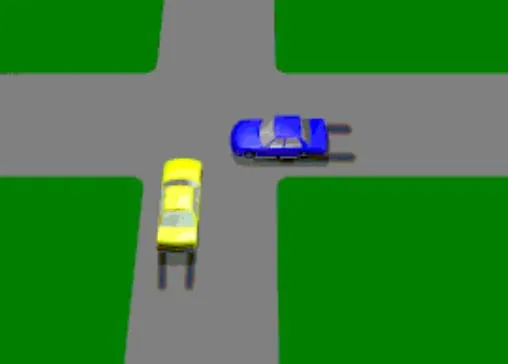
6. If your vehicle is involved in an accident (regardless of the damage), what details must you give, to the other driver(s), if asked?Official CG045
Answer: You must let them see your licence, take details, and give the name and address of the vehicle's owner.
After any crash you must stop and, if asked, show your licence and give your details and the owner's name and address. Holding back details until you call your insurer is not allowed.
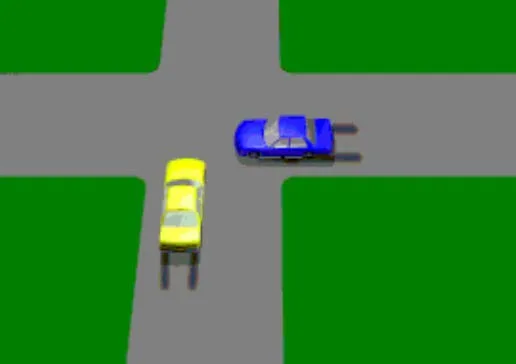
7. If a vehicle you are driving is involved in an accident and a person is injured, what must you do after stopping?Official CG046
Answer: Render every assistance and take immediate steps to have an ambulance notified. Then call the Police.
If anyone is hurt, you must stop, help the injured and have an ambulance called straight away, then notify police. Waiting days or judging by damage cost is not allowed.
8. If you see a sign indicating road repairs are going on, you should -Official CG053
Answer: Slow down and watch for traffic controllers and instructions.
A road repairs sign means workers and changed conditions ahead. Slow down and follow signs and traffic controllers' directions, which can alter at any time.
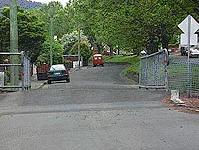
9. This bridge has only just enough room for two vehicles. As you come close to it you should -Official CG086
Answer: Slow down and pay extra attention.
The bridge is very narrow, so oncoming vehicles could meet on it. Slow down and take extra care so you can stop or give way, as the horn doesn't solve it.
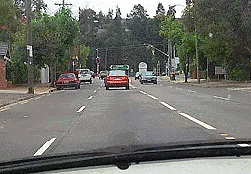
10. You hear the siren of an ambulance approaching you from behind. You should -Official CG090
Answer: Move into the left lane.
When you hear an ambulance behind you, move left to give it room to pass. Slowing without moving over or ignoring it could block it.
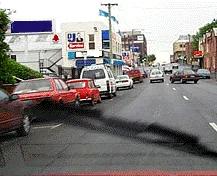
11. You are driving along this road. You hear an ambulance's siren and see the ambulance in your mirror. You should -Official CG091
Answer: Move to the left and make way for the ambulance.
Move left and, if needed, stop so the ambulance can pass on your right. Moving right or turning into a driveway opposite would block its path.
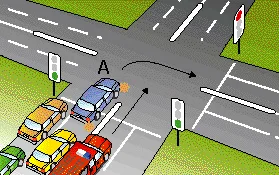
12. You are about to make a right hand turn at this intersection. You have the green light. You hear a siren and then see that a fire truck will soon overtake you. You should -Official CG092
Answer: Stop and let the fire truck overtake you.
Emergency vehicles must be given way even if you have a green light. Stop and let the fire truck overtake before turning.
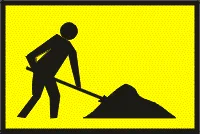
13. When you come across roadworks -Official CG093
Answer: You must obey the signs that are displayed at all times.
Roadworks signs apply at all times, because hazards like holes and changed lanes are there even when no one is working.
14. Generally, if you hear the siren of an emergency vehicle you should -Official CG094
Answer: Pull over to the left until the emergency vehicle passes.
When you hear a siren, pull over to the left and wait until the emergency vehicle has passed. Don't stop in the middle of the road or follow close behind.
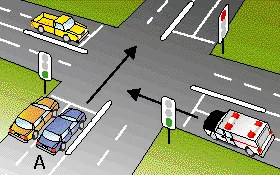
15. You are approaching a green light in vehicle A. An ambulance sounding its siren is approaching the same intersection and has a red light. You should -Official CG095
Answer: Slow down and stop if necessary to prevent getting in its way.
Even with a green light, give way to an emergency vehicle. Slow and stop if needed so you don't block it, rather than just keeping going.
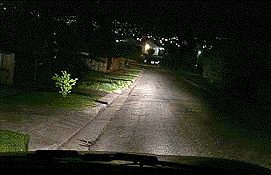
16. You are driving at night and there is no other traffic around you. When can you use your headlights on high beam?Official CG100
Answer: On any road, even if there are street lights.
High beam is allowed on any road at night if no other traffic is near, even where there are streetlights. Dip it when other vehicles come within range.
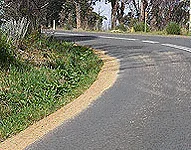
17. You drive up to a corner where you see some loose gravel on the road. You should -Official CG103
Answer: Slow down.
Loose gravel reduces grip, especially in a corner. Slow down before it, as braking or accelerating on gravel can cause a skid.
18. If you are driving towards a road works zone and a traffic controller displays a stop sign you must -Official CG118
Answer: Stop your vehicle and follow the directions of the traffic controller.
A traffic controller's stop sign must be obeyed. Stop and follow their directions, because they manage the hazards that you can't see.
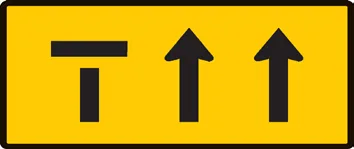
19. If you are driving through a road work zone in the left hand lane and you see this sign you should -Official CG119
Answer: Merge to the right and give way to other traffic.
The sign shows the left lane is closed ahead. Merge right early and give way to traffic already in the right lane.
20. When driving in wet weather, your vehicle will -Official FD002
Answer: Take longer and further to stop, so slow down.
Wet roads reduce tyre grip, so stopping distances increase. Slow down and leave more room rather than driving as you would on a dry road.
21. At night, if an oncoming vehicle's headlights dazzle you, you should -Official FD003
Answer: Slow down, until your eyes recover.
Slowing down gives your eyes time to recover from glare and lets you keep control. Closing your eyes is dangerous, and staring at the centre line can draw you towards oncoming headlights.
22. In wet weather when it becomes hard for you to see, you should -Official FD005
Answer: Turn on your headlights, slow down, and double your following distance behind the vehicle in front.
Headlights make you visible, slowing down helps you stop in time, and a bigger gap gives extra room on wet roads. High beam and flashing can dazzle or confuse others.
23. If you are driving and it starts to rain, you should -Official FD006
Answer: Slow down using the brake gently, since rain and oil may create a slippery surface.
Rain mixes with oil on the road and makes it slippery, so slow down and brake gently. Speeding up or using high beam does not help and increases the risk of a skid.
24. When driving on a slippery wet road, for example, one covered in early morning dew, your vehicle will -Official FD007
Answer: Take longer and further to stop.
A wet surface, even just dew, reduces tyre grip, so you need more distance to stop. Steering and braking become less effective, not easier.
25. Why should you avoid heavy braking on a wet road?Official FD010
Answer: Your wheels may skid and cause a loss of control.
Hard braking on wet roads can lock the wheels and make the car skid, so you lose steering control. Brake early and gently instead.
26. When it is very foggy during the day or night and your vehicle has no fog lights, you should -Official FD012
Answer: Slow down and use your low beam headlights and hazard warning lights to make your vehicle seen.
In fog, slow down and use low beam so you can see and be seen. High beam reflects off the fog and glares back, and following closely is dangerous when you cannot see far.
27. At night, when you approach an oncoming vehicle, you should -Official FD014
Answer: Not look at its headlights, but keep left and watch the left of the road.
Looking at oncoming headlights can dazzle you. Look towards the left edge of the road and keep left, so you stay in your lane and keep your night vision.
28. Which of the following attitudes is most likely to make you a safer driver?Official FD026
Answer: When I drive, I have the main responsibility for my safety and the safety of other road users.
Safe drivers accept responsibility for their own driving and for others on the road. Blaming others or luck leads to complacency and risk-taking.
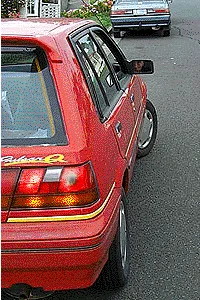
29. You are about to move away from the kerb in your car. What is the last thing you should do before you move into traffic?Official FD028
Answer: Check over your shoulder.
A final shoulder check covers your blind spot, where mirrors cannot see, so you can spot approaching traffic, cyclists or pedestrians before pulling out. Seat belt and seat should already be set.
30. What is the best way to avoid hitting other vehicles, people or animals when moving off from the kerb?Official FD030
Answer: Check your mirrors and look over your shoulder before moving off from the kerb.
Mirrors and a shoulder check together show vehicles, cyclists and pedestrians, including those in your blind spot. A horn does not replace looking, and rushing off without checking is risky.
31. Many people crash within the first few years of driving. What is the best way of learning to drive on your own without crashing?Official FD031
Answer: Start driving in daylight where it is not too busy and only drive in busier traffic as your driving gets better.
Gain experience gradually in easy conditions, such as daylight and light traffic, and build up as your skills improve. Jumping into hard conditions early greatly raises crash risk for new drivers.
32. It is important to scan while driving so you can see everything that is happening on the road. What does scanning involve?Official FD032
Answer: Continually looking ahead, to the sides and using all mirrors when driving.
Scanning means constantly checking ahead, to both sides and in all mirrors, so you spot hazards early. Looking only far ahead or only in mirrors leaves gaps in what you see.
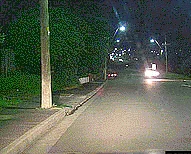
33. If you are a new driver and first start to drive at night you should -Official FD033
Answer: Drive mainly on streets that you know well.
Night driving is harder because you see less and judge distance poorly. New drivers should build up on familiar streets before trying unfamiliar roads or long trips.
34. While driving, you come across aggressive, selfish or ignorant driving behaviour by another driver. You should -Official FD041
Answer: Stay calm and in control of your vehicle at all times.
Staying calm keeps you in control and avoids escalating the situation. Reacting with horn, lights or chasing the other driver can lead to a crash or road rage.
35. If you hear the siren of an emergency vehicle, you must -Official LD014
Answer: Take whatever action is necessary (with safety) to make way for the emergency vehicle.
You must make way for emergency vehicles with sirens or flashing lights, as long as you do it safely. Speeding up or flashing lights does not help and may block them.
36. When driving near parked vehicles, you should -Official ND002
Answer: Check for parked vehicles with turn signals on, or children about to step out.
Parked cars may pull out, and children can step out from between them. Watch for indicators and people, and be ready to slow down.
37. You are approaching the crest (top of a hill) on a narrow road, the safest procedure is to -Official ND005
Answer: Keep to the left and slow down.
You can't see oncoming traffic over a crest on a narrow road. Keep left and slow down to give yourself time to react. Don't use your horn or speed instead.
38. If you are convicted of driving with a blood alcohol level that is over the limit for your licence, you could lose your driver's licence. You may also -Official ND028
Answer: Be sent to prison.
Driving over the legal alcohol limit can lead to losing your licence and even imprisonment. It is a serious offence because alcohol slows reactions and judgement.
39. If you are convicted of dangerous driving -Official ND030
Answer: You could lose your licence and may be sent to prison.
Dangerous driving is a serious offence, not just a fine. Penalties include losing your licence and possibly imprisonment.
40. You hear a siren behind you and see flashing blue lights in your mirror. What must you do?
Answer: Give way, moving left or stopping if needed
You must give way to an approaching emergency vehicle so it can pass. That may mean moving left, stopping or pulling out of the line of traffic.
NSW Road User Handbook: Police and emergency vehicles
41. An ambulance is stopped on the road ahead with its lights flashing. The speed limit is 60 km/h. How fast may you pass it?
Answer: No more than 40 km/h
Where the limit is 80 km/h or less, you must slow to 40 km/h when passing a stopped emergency vehicle with flashing lights.
NSW Road User Handbook: Police and emergency vehicles
42. A tow truck with flashing lights is stopped on a motorway signed at 110 km/h. What should you do?
Answer: Slow down safely and move over if it is safe
Where the limit is over 80 km/h, you must slow down safely and move over, which includes changing lanes on a multi-lane road if it is safe.
NSW Road User Handbook: When you see a breakdown
43. You have slowed to pass a stopped emergency vehicle. When may you speed up again?
Answer: After you are past all vehicles and people involved
You must not increase your speed until you are past every vehicle and person involved in the incident.
NSW Road User Handbook: Police and emergency vehicles
44. You have been in a crash. Which two actions should you take straight away?
Answer: Turn off the ignition and turn on the hazard lights
Turning off the ignition reduces fire risk, and hazard lights warn other drivers of the danger.
NSW Road User Handbook: Crashes
45. Someone is injured in a crash you are involved in. Who should you call?
Answer: An ambulance, then the police, on 000
If anyone is injured or killed, call an ambulance and then the police on triple zero.
NSW Road User Handbook: Crashes
46. You have a minor crash. Nobody is hurt and both cars can be driven away. Do you need police to attend?
Answer: No, but you must still exchange details
Police do not need to attend if there are no injuries and no vehicle needs towing. You must still exchange your details.
NSW Road User Handbook: Crashes
47. Police did not attend your crash and one vehicle was towed away. What must you do?
Answer: Report it to police within 24 hours
If police do not attend and a vehicle is towed, property is damaged or you cannot give your details, you must report the crash within 24 hours.
NSW Road User Handbook: Crashes
48. You are driving at night on high beam. At what distance from an oncoming vehicle must you switch to low beam?
Answer: 200 m
You must dip to low beam when a vehicle coming towards you is within 200 m. The same applies when following another vehicle within 200 m.
NSW Road User Handbook: High beam lights
49. When are you allowed to use your fog lights?
Answer: In fog, heavy rain, smoke or dust
Fog lights are only for fog, heavy rain or similar conditions that limit your vision. Switch them off once you can see clearly again.
NSW Road User Handbook: Fog lights
50. In which of these situations may you use your horn?
Answer: To warn animals to get off the road
A horn is only for warning others of your position or approach, or for scaring animals off the road. Never use it to scare or intimidate people.
NSW Road User Handbook: Horns and other warning devices
51. You are dazzled by the high beams of an oncoming car. What is the best response?
Answer: Look to the left edge and slow down if needed
Avoid looking at the headlights. Look to the left side of the road, drive to the left of your lane and slow down until your eyes recover.
NSW Road User Handbook: Avoid lights that dazzle
52. A kangaroo bounds onto the road ahead of you. What should you do?
Answer: Brake in a controlled way without swerving
Swerving can make you lose control or hit oncoming traffic. Slow down and brake in a controlled way.
NSW Road User Handbook: Wildlife and livestock
53. You come to a flooded road and cannot tell how deep the water is. What is the safest choice?
Answer: Turn around or wait until the road is clear
Floodwater hides damage and debris and can be deeper or faster than it looks. It is safer to turn around.
NSW Road User Handbook: Driving through water
54. You are approaching a railway level crossing. The boom gates are starting to close but you think you can make it. What must you do?
Answer: Stop, as the gates are closing
You must stop if the boom gate is closed or is opening or closing, and not cross until the gates are fully open and signals have stopped.
NSW Road User Handbook: Railway level crossings
55. Traffic is queuing ahead of a level crossing. When is it safe to drive onto the crossing?
Answer: Only if your whole vehicle can clear the track
You must never block a level crossing. Cross only if there is room on the far side for your whole vehicle.
NSW Road User Handbook: Railway level crossings
56. A traffic controller at roadworks is holding up a 'Stop' sign. What must you do?
Answer: Stop before reaching the sign
You must obey signs and signals from traffic controllers and stop before a handheld 'Stop' sign.
NSW Road User Handbook: Roadworks
57. Your car breaks down on a busy road. Which action fits the handbook advice?
Answer: Pull over as far left as you can, use hazard lights and stay belted in
Get well clear of traffic, use your hazard lights, and stay buckled in your vehicle while you call roadside assistance.
NSW Road User Handbook: Breakdowns
58. Your car breaks down inside a road tunnel. What should you do?
Answer: Pull over, use hazard lights and radio, and stay in the car
Pull into the breakdown bay or side of the lane, use hazards and the radio, and stay put. Major tunnels are monitored constantly.
NSW Road User Handbook: Breakdowns
59. It starts to rain heavily while you are driving. Which is the right response?
Answer: Turn on headlights, brake gently and leave a bigger gap
Wet roads are slippery and stopping takes longer, so be visible, brake gently and increase your crash avoidance space.
NSW Road User Handbook: Driving in wet weather
Questions people ask
- What speed must I drive past a stopped police car or ambulance in NSW?
- If the limit is 80 km/h or less, slow to 40 km/h when passing a stopped emergency vehicle with flashing lights. If the limit is higher than 80 km/h, slow down safely and move over if you can. Stay slow until you are past everyone involved.
- When must I switch from high beam to low beam in NSW?
- Switch to low beam when an oncoming vehicle is within 200 m, and when you are driving 200 m or less behind another vehicle. You may use high beam otherwise if you need to see further, even where there are street lights.
- What should I do if I have a crash in NSW?
- Stop, turn off the ignition and turn on your hazard lights. Help anyone who is hurt and call triple zero if there are injuries. Exchange your name, address and registration details with the other people involved.
- Is it safe to drive through floodwater?
- No. You cannot tell how deep or fast the water is, or what damage lies under it. It is safer to turn around and find another route or wait until the road is clear.
Other DKT topics
- Licences and learner rules
- Penalties and demerit points
- Alcohol and drugs
- Vehicle, seatbelts and towing
- Speed and following distance
- Intersections and give way
- Roundabouts, turning and U-turns
- Lanes, overtaking and merging
- Sharing the road
- Parking
- Phones, distraction and fatigue
- Traffic signs and road markings
Official questions from the NSW Driver Knowledge Test question bank, © State of New South Wales (Transport for NSW), licensed under CC BY 4.0. Answer order changed; explanations by PassRank. Other questions written by PassRank from the rules in the NSW Road User Handbook (© Transport for NSW).