Intersections and give way DKT practice
Part 1 and Part 2Free, no account
What you need to know
Around half of all crashes in NSW happen at intersections, so approach every one at a speed that lets you stop. A Stop sign or line means a complete stop, before the line and as close to it as possible, and you stay stopped until it is safe. A Give way sign or broken line means slow down and be ready to stop. At either, give way to vehicles in, entering or approaching the intersection.
At intersections with no signs, lines or lights, the rule is simple: if you turn across another vehicle's path, you give way to it. Turning right, you give way to vehicles coming from your right, to oncoming vehicles going straight or turning left, and to pedestrians. Turning left, you give way to vehicles on your right. At a T-intersection, the road that ends gives way to all traffic on the continuing road.
Traffic lights must always be obeyed, even at night with no one around. Red means stop behind the line. Yellow means stop unless you cannot do so safely. A red arrow means you must not turn that way, and a green arrow lets you turn that way only. A flashing yellow arrow lets you turn if you give way to pedestrians. If a Stop sign with three dots is shown and the lights fail, treat it as a Stop sign.
Always give way to pedestrians crossing the road you are turning into, even if their signal is flashing red. Never enter an intersection, level crossing or pedestrian crossing unless there is room for your vehicle on the far side. At a railway level crossing, stop for flashing red lights or a lowered boom gate and do not park within 20 m of the crossing.
NSW Road User Handbook: Stop signs and stop lines · Give way signs and give way lines · Intersections · Traffic lights · Railway level crossings
71 practice questions
Pick an answer to see whether it is right and why.
Stop signs or flashing lights at railway crossings should always be obeyed, because -
Mark one answer · keys A to D
All the questions with answers
1. Stop signs or flashing lights at railway crossings should always be obeyed, because -Official CG047
Answer: Trains are fast, heavy and cannot stop quickly.
Trains are very heavy and fast, so they can't stop quickly or swerve. Always obey stop signs and flashing lights at level crossings.
2. You should not drive across a railway level crossing when -Official CG048
Answer: Traffic is blocking the other side.
Never drive onto a level crossing unless you can clear it completely. If traffic is blocking the far side, you could be trapped on the tracks.
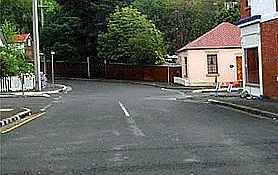
3. You should be particularly careful at this intersection because -Official CG088
Answer: The building blocks a good view of the side street.
The building on the corner blocks your view of the side street, so you can't see cars or pedestrians coming out. Slow down and look carefully.
4. As you approach an intersection, you should check for traffic on your left and right -Official IN001
Answer: At all times before entering the intersection.
Intersections are where paths cross, so you must always check both sides before entering, whatever the signs or how busy it is. Other drivers may not obey the rules.
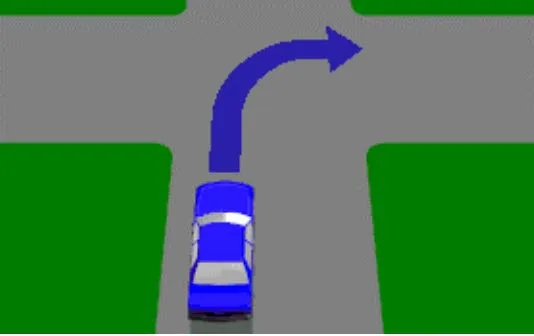
5. When making a right-hand turn at the intersection shown, you must give way to -Official IN003
Answer: An oncoming vehicle going straight ahead or turning left and any vehicle on your right.
When turning right you give way to oncoming vehicles going straight or turning left, and to any vehicle on your right. Pedestrians crossing the road you enter also have priority.
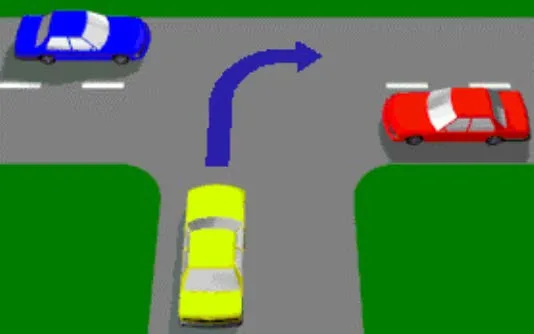
6. If turning right at a T-intersection (as shown) must you give way to vehicles approaching from both the left and right?Official IN004
Answer: Yes, whether they are turning or not.
At a T-intersection a right-turning driver coming from the stem must give way to all traffic on the through road, from both left and right, whether it is turning or going straight.
7. If a STOP or GIVE WAY sign has been knocked down, for example, as the result of an accident, does the line marked across the road have any meaning?Official IN005
Answer: Yes, it has the same meaning as the sign itself.
Road markings carry the same legal weight as signs. If a stop or give way sign is missing, the line across the road still tells you what to do.
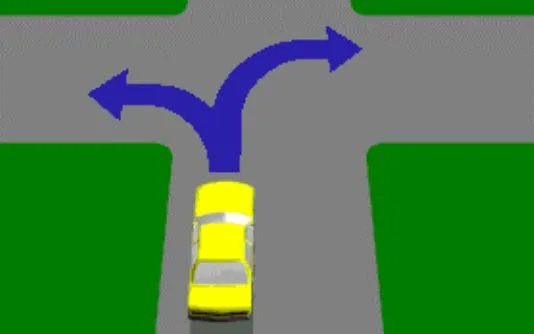
8. If turning at an intersection are you required to give way to pedestrians?Official IN006
Answer: Yes, a driver turning right or left must give way to pedestrians, if there is a danger of a collision
Pedestrians crossing the road you are turning into have priority. A driver turning in either direction must give way to avoid a collision.
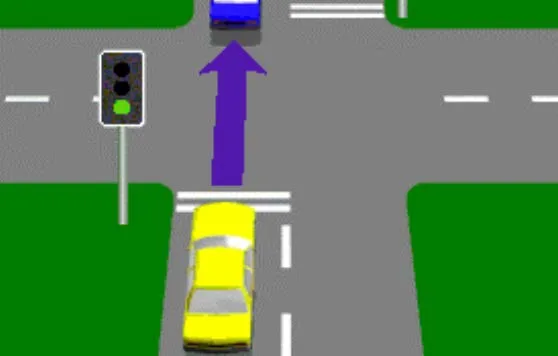
9. When you come to an intersection and the road beyond is choked with vehicles going in the same direction, what should you do?Official IN007
Answer: Wait until there is room for you to completely cross the intersection.
Never enter an intersection unless there is room to clear it completely on the other side. Otherwise you block cross traffic and cause gridlock.
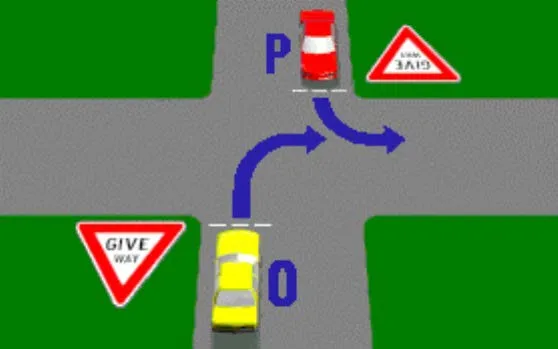
10. In this diagram both vehicles O and P must pass through GIVE WAY signs before entering the intersection. Which vehicle goes first?Official IN010
Answer: Vehicle P.
A driver turning right gives way to oncoming vehicles going straight or turning left. P is turning left and O is turning right, so P goes first even though both have give way signs.
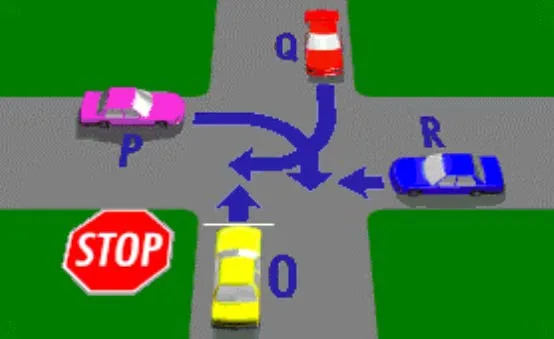
11. Vehicle O is at a STOP sign -Official IN011
Answer: Vehicle O must give way to vehicles P, Q and R.
At a stop sign you must stop and give way to all vehicles on the road you are entering or crossing. P, Q and R are all on that road, so O must give way to all three.
12. The diagram shows a marked pedestrian crossing at an intersection. There is also a STOP sign at the intersection. You have already stopped for a pedestrian. Must you stop again at the STOP line?Official IN013
Answer: Yes, at all times.
Having stopped for a pedestrian does not replace the stop sign. You must also stop at the stop line, then give way before moving off.
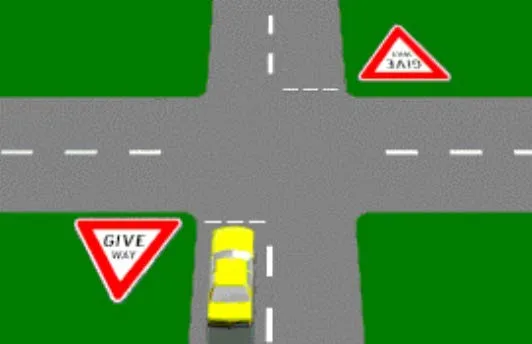
13. A GIVE WAY sign at an intersection means that you must -Official IN014
Answer: Be ready to stop and give way to all other traffic if there is danger of a collision.
A give way sign means slow down and be ready to stop. You must give way to all vehicles and pedestrians that you could collide with.
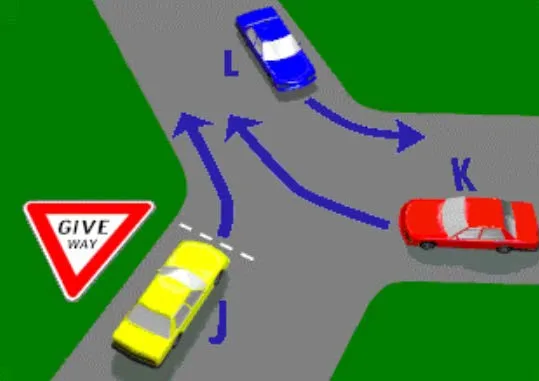
14. Which vehicle in the diagram must give way?Official IN016
Answer: Vehicle J.
J is stopped at a give way sign on the side road, so J must give way to the vehicles on the main road, K and L.
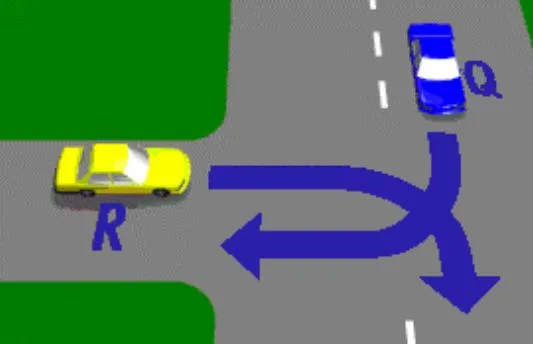
15. At the T-intersection shown in the diagram which vehicle should give way?Official IN019
Answer: Vehicle R.
R is on the road that ends at the T-intersection, so R must give way to vehicles on the through road, including Q.
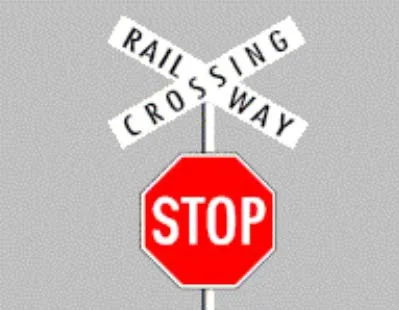
16. What should you do on approaching a railway level crossing displaying a STOP sign?Official IN026
Answer: Stop at all times and proceed when safe to do so.
A stop sign at a level crossing means you must always stop, look and listen. Only proceed when you are sure no train is coming.
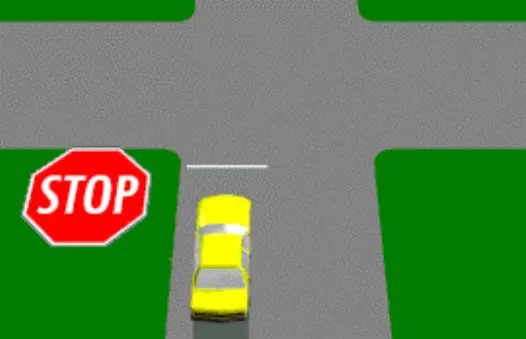
17. You are driving the car in the diagram. You must stop -Official IN027
Answer: Even when there is no other traffic.
A stop sign with a stop line means you must come to a complete stop at the line every time, even if the road looks empty. Then give way before going.
18. If the boomgates are down and the signals are flashing, at a railway level crossing, you may begin to cross -Official IN028
Answer: Only when the gate is up and the lights stop flashing.
Boomgates down or flashing signals mean a train is coming or on the way. Never drive around gates, and wait until the gates are fully up and the lights have stopped.
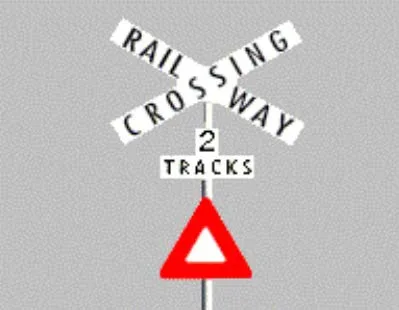
19. When approaching a railway level crossing displaying this sign, you must -Official IN029
Answer: Slow down, look both ways for trains and be prepared to stop if necessary.
This sign warns of a level crossing ahead. Slow down, look both ways for trains and be ready to stop. Speeding up or not slowing is dangerous.
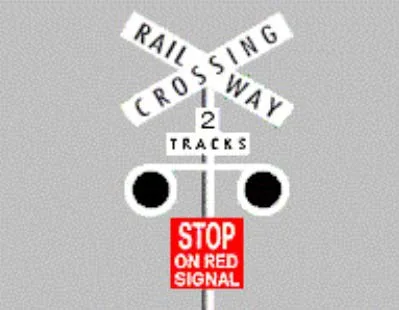
20. Even if the signal at a railway level crossing does not indicate that a train is coming, you should -Official IN030
Answer: Slow down, be ready to stop and give way if there is danger of collision.
Even when no signal warns of a train, always slow down and be ready to stop. Trains cannot stop quickly and may not be easy to see or hear.
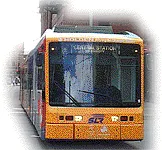
21. You come to an intersection in Sydney with a Light Rail vehicle about to enter. What should you do?Official IN034
Answer: Wait until the intersection is clear.
Light rail vehicles are heavy and cannot swerve or stop quickly. If one is about to enter the intersection, wait until it is clear rather than trying to beat or squeeze past.
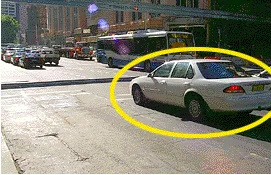
22. You approach an intersection in busy traffic and want to go straight ahead. The traffic lights turn green. When are you permitted to enter the intersection?Official IN035
Answer: Only when there is room for your vehicle on the other side.
Even on green you may only enter if there is room for your vehicle on the other side. Otherwise you block the intersection when the lights change.
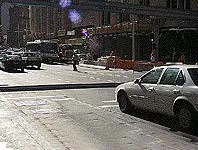
23. You are at a busy intersection with slow moving traffic and want to go straight ahead. When the traffic lights change to green you should make sure that -Official IN037
Answer: You do not block the intersection.
On green in slow traffic, check there is space to clear the intersection before entering. Blocking it stops cross traffic and is an offence.
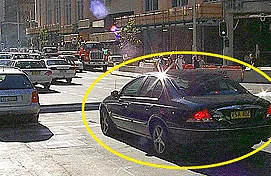
24. The traffic on the other side of this intersection has stopped. You are in the car shown and want to cross the intersection. The lights are green. What should you do?Official IN038
Answer: Wait until there is enough room for your vehicle to cross the intersection completely.
The traffic ahead has stopped, so wait until there is room for your whole car to clear the intersection. Entering and hoping the lights do not change would block cross traffic.
25. Which statement is correct?Official IN039
Answer: Red light cameras take photographs of vehicles that enter intersections when the lights are red.
Red light cameras photograph vehicles that enter the intersection after the light has turned red. They are not about yellow lights.
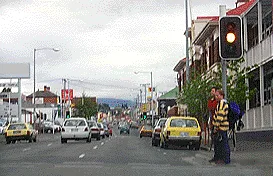
26. As you drive into an intersection, the lights turn to yellow. You should -Official IN040
Answer: Continue through the intersection.
You are already entering the intersection, so keep going and clear it. Braking hard there can leave you stuck in the intersection or cause a rear-end crash. If you are far enough back to stop safely on yellow, you must stop.
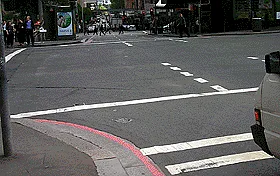
27. You wish to turn left here. The pedestrian lights are flashing red. You should -Official IN043
Answer: Give way to pedestrians still crossing.
Flashing red means pedestrians must not start crossing, but those already crossing may finish. When turning left you must give way to them.
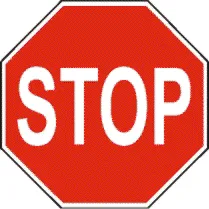
28. You drive up to an intersection with a stop sign. There is no painted stop line. Where should you stop?Official IN044
Answer: Before coming to and as near to the intersection as possible.
With no stop line, stop as close as possible to the intersection and before entering it, in a position where you can see traffic clearly.
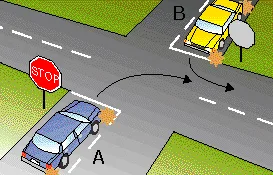
29. You drive up to an intersection with a stop sign in the car marked A and you wish to turn right. The car marked B facing you also has a stop sign and is indicating to turn left. Who can go first?Official IN045
Answer: Car B.
A is turning right and B is turning left from the opposite direction. A turning right must give way to oncoming traffic turning left, so B goes first.
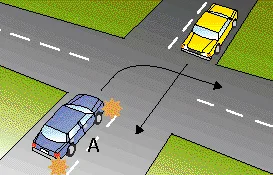
30. This intersection does not have any traffic lights or signs. You are in car A and want to turn right. When can you go?Official IN046
Answer: After the car going straight ahead has passed.
With no signs or lights, a driver turning right gives way to oncoming vehicles going straight ahead, so A waits until the yellow car has passed.
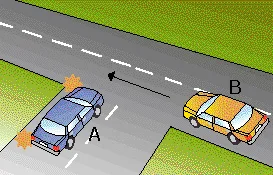
31. At this intersection there are no signs or traffic lights. You are in the car marked A. You want to turn left. What should you do?Official IN048
Answer: Slow down and give way to car B on your right.
A is leaving the side road and B is on the road to A's right, so A must slow down and give way to B before turning left.
32. When police officers are at intersections giving directions you must -Official IN051
Answer: Always follow any instruction they give you.
A police officer's directions override signs and lights. Always obey any instruction from them.
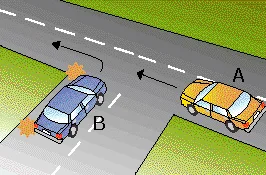
33. You are in car A and are going straight ahead through the intersection. Who should give way?Official IN053
Answer: Car B.
B is turning right across A's path. A turning vehicle must give way to oncoming traffic going straight, so B gives way to A.
34. If you enter an intersection that is under the control of a traffic controller -Official IN068
Answer: Follow the directions of the controller.
A traffic controller's directions override signs and signals. Always follow their instructions.
35. You are at an intersection and see a pedestrian crossing the road into which you are turning. You must -Official IN069
Answer: Give way to the pedestrian.
Pedestrians crossing the road you are turning into have priority. Wait for them to clear it rather than hurrying them or swerving around them.
36. When entering or leaving a driveway you must -Official ND047
Answer: Give way to bicycles, vehicles and pedestrians.
You must give way to anyone already on the footpath or road when crossing a driveway. Pedestrians and bicycles are easily missed, so don't rely on your horn.
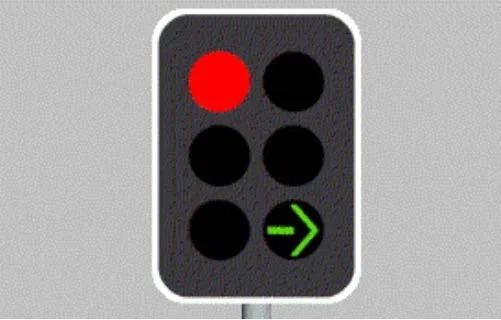
37. You are facing traffic lights (as shown). What do they mean?Official TL001
Answer: You may proceed only in the direction of the green arrow.
The red light still applies to straight-ahead traffic, but the green arrow shown on the right lets you move in that direction only. Give way to pedestrians if needed.
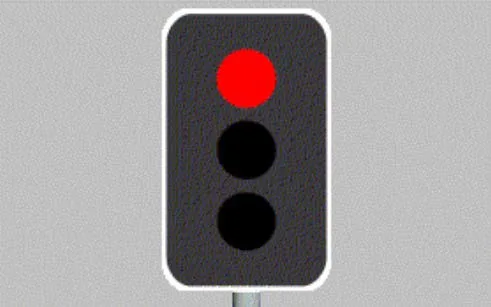
38. At traffic lights what is meant when a red light appears?Official TL002
Answer: Stop, wait behind the stop line until the lights change to green.
A red light means stop behind the stop line and stay there until the light turns green. You cannot go through even if the way looks clear.
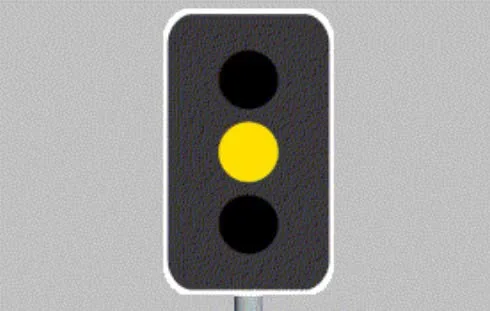
39. What should you do when approaching traffic lights which change from green to yellow?Official TL003
Answer: Stop at the stop line unless you are so close that sudden or sharp braking might cause an accident.
Yellow means stop if you can do so safely. Only continue if you are so close that braking hard could cause a crash. Do not speed up to beat the red.
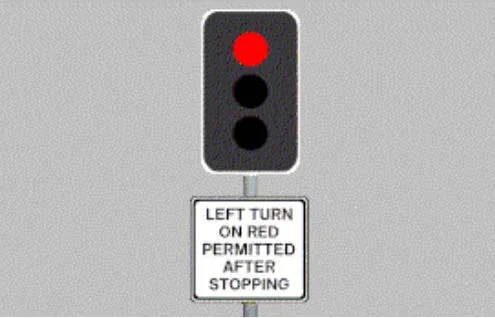
40. What may you do at an intersection with traffic lights at which this sign is displayed?Official TL004
Answer: If the lights are red you must first stop, then you may turn left if it is safe to do so.
The sign allows left turns on a red light, but you must stop first, then give way to pedestrians and traffic before turning if it is safe.
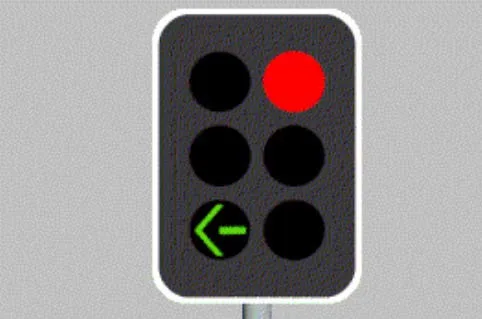
41. These lights mean that you -Official TL006
Answer: Can turn left, but not go straight ahead.
The red circle bars going straight, but the green left arrow lets you turn left only. Give way to pedestrians crossing.
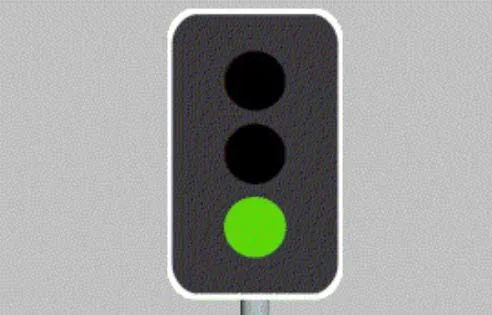
42. This light means, you -Official TL007
Answer: Can go straight ahead, or turn left or turn right, if it is safe to do so.
A plain green light lets you go straight, turn left or turn right, as long as it is safe. You must give way to pedestrians and oncoming traffic when turning.
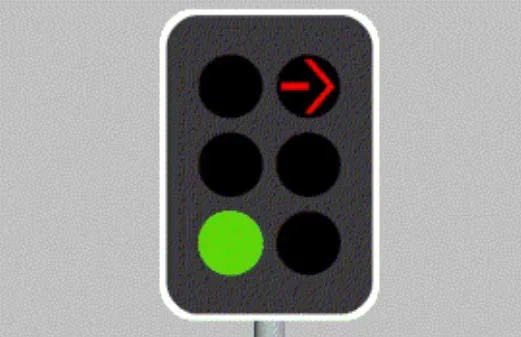
43. It is 3 o'clock in the morning. You cannot see any other traffic. You want to turn right. You may -Official TL008
Answer: Not turn right while the arrow is red.
A red arrow means you must not turn that way until it changes, even at 3am with no traffic. Only a green arrow or a green circle with no arrow lets you turn.
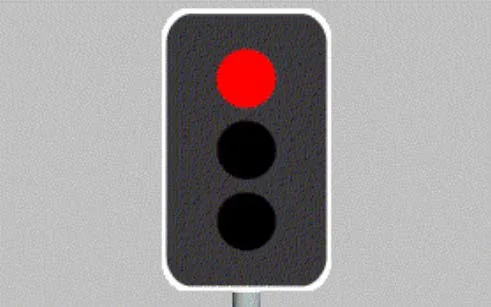
44. As you approach an intersection with traffic lights, the yellow light turns to red. You must -Official TL010
Answer: Stop and wait for the green light.
Yellow turning to red means the light has ended for you, so stop behind the line and wait for green. Going through is dangerous and illegal.
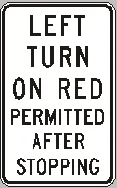
45. You approach an intersection showing a red light and the sign shown. You wish to turn left. You must -Official TL011
Answer: Stop and turn left only if it is safe.
The sign allows a left turn on red, but you must first come to a complete stop, then turn only if it is safe and you give way to others.
46. It is early morning and there is no other traffic about. You approach an intersection when the traffic lights change from green to yellow. What should you do?Official TL012
Answer: Stop.
A yellow light means stop whatever the time of day, unless you are too close to stop safely. Never assume the road is empty or sound your horn instead.
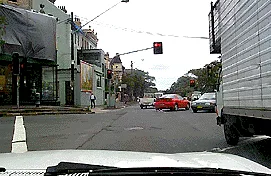
47. You are waiting at an intersection and the lights are red. The traffic lights change to green. You should -Official TL013
Answer: Check both sides of the intersection and then proceed.
Green does not guarantee the way is clear. Check both sides for vehicles or pedestrians still crossing or running the red light, and then go.
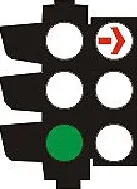
48. You want to turn right at an intersection and see this traffic light. You should -Official TL014
Answer: Stay behind the stop line until the green arrow shows.
The red right arrow means no right turn until a green arrow appears. Wait behind the stop line, because the green circle only lets you go straight or left.
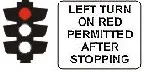
49. You wish to turn left at this intersection. The traffic lights are red and you see this sign. You should -Official TL015
Answer: Stop, then if you see it is safe turn left.
The sign allows a left turn on red after stopping. Stop at the line first, then turn left only if it is safe and you have given way.
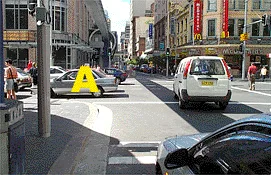
50. You wish to turn left at this intersection and the traffic lights are green. What should you do?Official TL016
Answer: Wait behind the stop line until there is room for you to enter the new road.
You must not enter an intersection unless there is room to clear it. Car A is waiting in the road you are turning into, so wait behind the stop line until there is space.
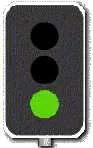
51. As you approach a set of traffic lights at an intersection, they change from green to yellow (amber). You must -Official TL017
Answer: Stop before the lights, unless you are so close that sudden braking might cause an accident.
Yellow means stop. Only continue if stopping would need sudden, hard braking that could cause a crash. Accelerating to beat red is illegal and risky.
52. There is a Stop sign but no line at an intersection. Where must you stop?
Answer: Before the intersection, as close to it as you can
With a Stop sign and no line at an intersection, you stop before and as close as possible to the intersection.
NSW Road User Handbook: Stop signs and stop lines
53. You are at a Stop line and see no other traffic anywhere. Can you roll through slowly?
Answer: No, you must stop completely and wait until it is safe
A Stop sign or line means a complete stop, and you must stay stopped until it is safe to go.
NSW Road User Handbook: Stop signs and stop lines
54. You approach a Give way sign and a single broken line. What must you do?
Answer: Slow down and be ready to stop
At a Give way sign or line you slow down and prepare to stop, giving way to others.
NSW Road User Handbook: Give way signs and give way lines
55. You turn right at an intersection with no signs or lights. Who must you give way to?
Answer: Traffic on the right, oncoming straight or left-turners, and pedestrians
When turning right at an unsigned intersection, you give way to vehicles approaching from the right, oncoming vehicles going straight or turning left, and pedestrians.
NSW Road User Handbook: Intersections
56. You turn left at an intersection with no signs. A car is going straight through from your right. What do you do?
Answer: Give way to the car coming from your right
At an unsigned intersection, a driver turning left gives way to vehicles on their right and to pedestrians.
NSW Road User Handbook: Intersections
57. Your road ends at a T-intersection with no signs. Who gives way?
Answer: You give way to all vehicles on the continuing road
The driver on the road that ends gives way to all vehicles on the continuing road, unless a sign says otherwise.
NSW Road User Handbook: Intersections
58. What must you do when a traffic light is red?
Answer: Stop as close as you can behind the Stop line
A red light means stop, as close as possible behind the Stop line, even if the road looks clear.
NSW Road User Handbook: Traffic lights
59. The light turns yellow while you are still well back from the Stop line. What should you do?
Answer: Stop, because you can do so safely
A yellow light means stop, unless you are too close to stop safely. You should not speed up to beat it.
NSW Road User Handbook: Traffic lights
60. The signals show a green light and a red right arrow. What can you do?
Answer: Go straight ahead or turn left
A red arrow means you must not turn in that direction, but the green light lets you go straight or turn the other way.
NSW Road User Handbook: Traffic lights
61. You see a flashing yellow right arrow. What does it mean?
Answer: You may turn right, but you must give way to pedestrians
A flashing yellow arrow lets you turn in its direction, as long as you give way to pedestrians crossing the road you turn into.
NSW Road User Handbook: Traffic lights
62. The signals show a green right arrow and a red light. What can you do?
Answer: Turn right only
A green arrow allows you to turn that way only. If you are not turning in that direction, the red light means stop.
NSW Road User Handbook: Traffic lights
63. You see a sign allowing a left turn on a red light. What must you do?
Answer: Stop, then turn when clear, giving way to traffic from the right
You stop at the red light, then turn left when it is clear, giving way to traffic approaching from the right and to pedestrians.
NSW Road User Handbook: Traffic lights
64. You are waiting in the intersection to turn right on a green light with no arrow, and the light turns red. What should you do?
Answer: Turn right as soon as it is safe to do so
If the light changes while you are in the intersection, you must complete your right turn as soon as it is safe.
NSW Road User Handbook: Traffic lights
65. When may you make a U-turn at traffic lights?
Answer: Only where a 'U-turn permitted' sign is shown
You must not make a U-turn at traffic lights unless a 'U-turn permitted' sign allows it.
NSW Road User Handbook: Traffic lights
66. The traffic lights are not working, and a Stop sign with three black dots is displayed. What do you do?
Answer: Follow the same rules as for a Stop sign
When the lights fail or flash yellow, a Stop sign with three dots applies as a normal Stop sign.
NSW Road User Handbook: Stop signs and stop lines
67. Traffic is queued beyond a green light, and there is no space for you on the far side. What should you do?
Answer: Wait before the intersection until there is room beyond it
You must not enter an intersection unless there is space for your vehicle in your lane on the other side.
NSW Road User Handbook: Intersections
68. You turn left at traffic lights, and pedestrians are still crossing although their signal is flashing red. What should you do?
Answer: Give way to the pedestrians who are still crossing
You must give way to any pedestrian still crossing the road you are turning into, even when their signal is flashing red.
NSW Road User Handbook: Traffic lights
69. You approach a railway level crossing with flashing red lights. What must you do?
Answer: Stop, and wait until the lights stop and the gates are open
Flashing red lights mean stop. You must not cross until the signals stop and gates or boom gates are fully open.
NSW Road User Handbook: Railway level crossings
70. How close to a railway level crossing may you stop or park?
Answer: No closer than 20 m on either side of it
You must not stop or park on a level crossing or within 20 m of either side of it.
NSW Road User Handbook: Railway level crossings
71. At an intersection with no signs, you and an oncoming driver are both turning right. What happens?
Answer: Both can turn together and pass in front of each other
Two vehicles turning right from opposite directions can turn at the same time and pass in front of each other.
NSW Road User Handbook: Intersections
Questions people ask
- Who has right of way at an intersection with no signs in NSW?
- Whoever is not turning across another vehicle's path. If you turn, you give way to vehicles that you cross, and you always give way to pedestrians crossing the road you are turning into. Turning left, give way to vehicles on your right.
- What does a flashing yellow arrow mean?
- You may turn in the direction of the arrow, but you must give way to pedestrians crossing the road you are turning into. It is not a signal to stop.
- Do I have to stop at a yellow light?
- Yes. A yellow light means stop, unless you are so close that you cannot stop safely before the line. Do not brake suddenly and do not speed up to beat the light.
- Can I turn right when the light is green but there is no arrow?
- Yes, but only when there is a break in oncoming traffic. If the light changes while you are waiting in the intersection, finish your turn as soon as it is safe.
Other DKT topics
- Licences and learner rules
- Penalties and demerit points
- Alcohol and drugs
- Vehicle, seatbelts and towing
- Speed and following distance
- Roundabouts, turning and U-turns
- Lanes, overtaking and merging
- Sharing the road
- Hazards and emergency vehicles
- Parking
- Phones, distraction and fatigue
- Traffic signs and road markings
Official questions from the NSW Driver Knowledge Test question bank, © State of New South Wales (Transport for NSW), licensed under CC BY 4.0. Answer order changed; explanations by PassRank. Other questions written by PassRank from the rules in the NSW Road User Handbook (© Transport for NSW).